
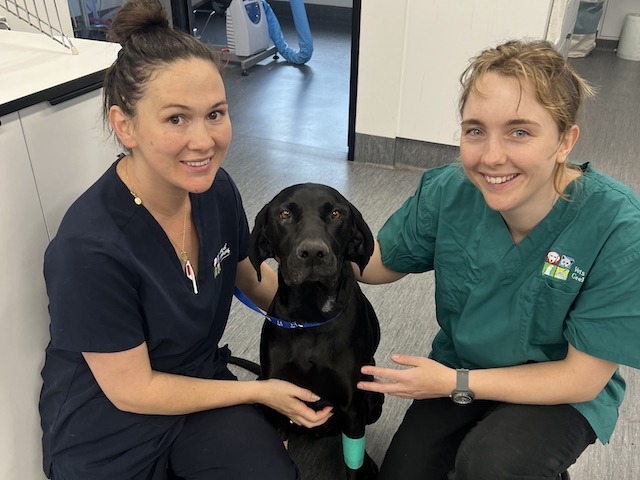
By the Vets of Geelong Veterinary Team
Has your older dog started slowing down on walks, struggling to get out of bed or hesitating before jumping into the car?
It’s easy to put these changes down to getting older. However, they may be signs of arthritis, a common and often painful condition affecting dogs as they age.
One of the most important things for dog owners to understand is that slowing down isn’t always a normal part of ageing. Sometimes it’s a sign that your dog is uncomfortable.
The good news is that arthritis can often be managed effectively. With early recognition, appropriate treatment and a few changes at home, many dogs can continue enjoying their walks, playing with their families and living comfortable, active lives.
At Vets of Geelong, we regularly help owners recognise the early signs of arthritis and develop individual treatment plans to improve their dog’s comfort and quality of life.
What Is Arthritis in Dogs?
Arthritis, also known as osteoarthritis or degenerative joint disease, is a condition that affects the joints.
Healthy joints have smooth cartilage that allows bones to move comfortably against each other.
Over time, this cartilage can become damaged, and changes develop within the joint. These changes can cause inflammation, stiffness, pain and reduced movement.
Arthritis commonly affects the hips, knees, elbows and other joints.
Although it’s particularly common in older dogs, younger dogs can also develop arthritis, especially if they have an underlying joint problem, such as hip dysplasia, or have previously suffered a joint injury.
Arthritis is generally a long-term condition, but that doesn’t mean your dog has to live in constant pain.
What Are the Early Signs of Arthritis in Dogs?
Arthritis often develops gradually, so the early signs can be surprisingly subtle.
Many dogs don’t cry, whimper or show obvious signs of pain. Instead, they quietly change how they move and behave.
Some of the most common signs include:
1. Stiffness After Sleeping or Resting
You might notice your dog takes longer to stand up after lying down, particularly first thing in the morning.
They may appear stiff for the first few steps but move more freely once they’ve been walking for a little while.
This is one of the most common signs owners notice.
2. Slowing Down on Walks
A dog that previously loved long walks may begin walking more slowly, stopping more frequently or wanting to turn around earlier.
Some dogs may lag behind their owners or seem less enthusiastic about going outside.
It’s easy to assume they’re simply getting older, but reduced activity can be a sign of discomfort.
3. Difficulty Jumping Into the Car or Onto Furniture
Does your dog hesitate before jumping into the car?
Have they stopped getting onto the couch or bed?
Activities that involve jumping can become uncomfortable when joints are painful.
You might notice your dog waiting for assistance or avoiding these activities altogether.
4. Trouble With Stairs or Slippery Floors
Dogs with arthritis may become reluctant to climb stairs or struggle to maintain their footing on polished floorboards and tiles.
They may move cautiously or avoid certain areas of the house.
5. Changes in Behaviour or Personality
Pain doesn’t always show up as limping.
Some dogs become quieter, less playful or more withdrawn.
Others may become irritable when touched or handled, particularly around painful joints.
You might notice your dog no longer enjoys being groomed or is reluctant to participate in activities they previously loved.
6. Limping or Favouring One Leg
Some dogs develop an obvious limp, particularly after exercise.
Others may shift their weight away from a painful leg or adopt an unusual walking pattern.
However, many dogs with arthritis in several joints don’t develop a noticeable limp.
7. Licking or Chewing Around a Joint
Some dogs repeatedly lick or chew around an uncomfortable area.
While licking can have several causes, persistent attention to a particular joint may indicate pain.
Is My Dog Just Getting Old, or Could It Be Arthritis?
This is one of the most common questions we hear from owners.
As dogs age, it’s natural for their energy levels and activity preferences to change. However, significant stiffness, difficulty getting up or reluctance to move shouldn’t automatically be dismissed as normal ageing.
A useful question to ask yourself is:
“Is my dog choosing to slow down, or are they finding it harder to do the things they used to enjoy?”
For example, an older dog might prefer a shorter walk but still move comfortably and enthusiastically.
A dog with arthritis may want to go for a walk but struggle to get up, hesitate on stairs or become noticeably stiff afterwards.
If you’re unsure, a veterinary examination can help identify whether arthritis or another health problem is contributing.
Which Dogs Are Most Likely to Develop Arthritis?
Any dog can develop arthritis, but some are at greater risk.
Factors include:
- Age: Arthritis becomes more common as dogs get older.
- Breed and size: Large and giant breeds can be more susceptible to certain joint problems.
- Previous injuries: Dogs that have suffered ligament injuries, fractures or joint damage may develop arthritis later.
- Joint conditions: Hip dysplasia, elbow dysplasia and other developmental conditions can increase the risk.
- Excess body weight: Carrying additional weight places more strain on joints and can contribute to discomfort.
Arthritis can affect both large and small dogs, so it’s worth watching for changes in mobility regardless of your dog’s breed.
How Do Vets Diagnose Arthritis in Dogs?
At Vets of Geelong, diagnosing arthritis begins with understanding the changes you’ve noticed at home.
Your veterinarian may ask about your dog’s mobility, exercise habits, behaviour and whether they seem stiff or uncomfortable at particular times.
A physical examination can help assess:
- Joint movement and flexibility
- Pain or discomfort when joints are moved
- Muscle loss
- Joint swelling or thickening
- Changes in walking or posture
In some cases, X-rays are recommended to assess changes within the joints or investigate other possible causes of pain.
All four Vets of Geelong clinics have digital X-ray facilities.
Blood and urine tests may also be recommended, particularly for older dogs or before starting certain medications.
Importantly, the severity of changes visible on X-rays doesn’t always match how much pain a dog experiences. Your dog’s behaviour, comfort and mobility are important parts of the assessment.
Can Arthritis in Dogs Be Treated?
Yes. Although arthritis generally cannot be cured, there are several ways to manage pain, improve mobility and support your dog’s quality of life.
Treatment is usually most effective when several approaches are combined.
Every dog is different, so your veterinarian will recommend a plan based on their age, health, lifestyle and the severity of their condition.
1. Weight Management
Maintaining a healthy body weight is one of the most important things you can do for a dog with arthritis.
Extra weight increases the load on painful joints and can make movement more difficult.
Even modest weight loss in an overweight dog can improve comfort and mobility.
Your veterinarian can help assess your dog’s ideal weight and recommend an appropriate feeding plan.
2. Regular, Gentle Exercise
It might seem logical to stop exercising a dog with sore joints, but complete inactivity can lead to muscle loss and worsening stiffness.
For many dogs, regular, controlled exercise is beneficial.
This might include:
- Shorter, more frequent walks
- Gentle, consistent daily activity
- Avoiding sudden increases in exercise
- Reducing repetitive jumping or high-impact games
- Adjusting activity based on your dog’s comfort
The goal is to maintain strength and mobility without overloading painful joints.
Your veterinarian can help determine an appropriate exercise level.
3. Pain Relief and Anti-Inflammatory Medication
Medication can play an important role in keeping dogs with arthritis comfortable.
Non-steroidal anti-inflammatory drugs, commonly called NSAIDs, are frequently used to help manage pain and inflammation.
However, these medications aren’t suitable for every dog, particularly those with certain underlying health conditions.
Your veterinarian may recommend blood tests and ongoing monitoring to ensure treatment remains appropriate.
Never give your dog human painkillers such as ibuprofen or naproxen. These can be dangerous or even life-threatening to pets.
4. Beransa Injections for Arthritis
At Vets of Geelong, Beransa is one of the treatment options we may discuss for dogs with osteoarthritis.
Beransa contains bedinvetmab, a monoclonal antibody designed to target nerve growth factor, which is involved in arthritis pain signalling.
It is administered as an injection, generally at monthly intervals.
Some dogs experience improved comfort and mobility with this treatment, although responses vary.
Like all medications, Beransa has potential risks and side effects. Your veterinarian will discuss its suitability, current safety information and whether it is appropriate for your dog.
Beransa is not a cure for arthritis and is generally considered as part of an overall management plan.
5. Pentosan Polysulfate Injections
Pentosan polysulfate is another treatment that may be considered for selected dogs with arthritis.
It is administered by injection and may form part of a broader arthritis management plan.
Its suitability and expected benefits depend on the individual dog, and your veterinarian will discuss the available evidence, risks and alternatives before recommending treatment.
6. Physiotherapy and Rehabilitation
Some dogs benefit from rehabilitation exercises, physiotherapy or hydrotherapy.
These approaches may help maintain muscle strength, support mobility and improve confidence with movement.
Your veterinarian can advise whether these options are suitable and whether referral to an appropriately qualified rehabilitation provider would be helpful.
What Can I Do at Home to Help My Dog With Arthritis?
Small changes around the house can make a surprisingly big difference.
Here are some practical ways to help your dog stay comfortable.
Make Floors Less Slippery
Polished floorboards and tiles can be difficult for dogs with painful joints.
Non-slip mats or runners can provide better grip, particularly in areas where your dog regularly walks or gets up from resting.
Provide a Comfortable Bed
A supportive bed in a warm, quiet location can help your dog rest comfortably.
Choose a bed that’s easy to get in and out of without needing to climb over high sides.
Use Ramps Where Appropriate
A ramp may help your dog get into the car or access other areas without jumping.
Make sure ramps are stable, non-slip and introduced gradually.
Keep Exercise Consistent
Several shorter walks may be more comfortable than one long walk.
Try to avoid the pattern of very little activity during the week followed by a long, strenuous outing on the weekend.
Keep Nails Trimmed
Overgrown nails can affect how dogs stand and walk, particularly on hard or slippery surfaces.
Regular nail care can help maintain more comfortable movement.
Watch for Changes
Pay attention to how easily your dog gets up, walks, climbs stairs and settles at night.
Keeping a short record or taking videos can help your veterinarian assess changes over time.
How Do I Know Whether My Dog’s Arthritis Treatment Is Working?
Improvement isn’t always dramatic.
Sometimes the first changes are small:
- Your dog gets out of bed more easily.
- They seem more enthusiastic about walks.
- They can climb stairs with less hesitation.
- They settle more comfortably at night.
- They begin playing or interacting more.
- They appear less stiff after resting.
These changes can be important indicators that your dog is feeling better.
Regular reassessment helps determine whether the treatment plan is working or needs adjustment.
If your dog seems worse, develops new symptoms or experiences a suspected medication side effect, contact your veterinarian.
When Should I Book a Veterinary Appointment?
If you’ve noticed your dog slowing down, struggling to stand or becoming reluctant to exercise, it’s worth arranging a veterinary examination.
You don’t need to wait until they’re obviously limping or struggling to walk.
Early assessment can help identify the cause and allow treatment to begin before discomfort becomes more severe.
Seek prompt veterinary attention if your dog suddenly cannot bear weight on a leg, develops significant swelling, appears to be in severe pain or experiences a sudden deterioration in mobility.
These signs may indicate an injury or another condition requiring urgent assessment rather than routine arthritis management.
Frequently Asked Questions
Is Arthritis Painful for Dogs?
Yes. Arthritis can cause chronic pain, stiffness and reduced mobility. Dogs don’t always show obvious signs of discomfort, so changes in behaviour or activity may be important clues.
Can Dogs Have Arthritis Without Limping?
Absolutely. Many dogs with arthritis don’t have an obvious limp. They may simply slow down, hesitate before jumping or struggle to get up after resting.
At What Age Do Dogs Develop Arthritis?
Arthritis becomes more common as dogs age, but it can affect younger dogs, particularly those with joint abnormalities or previous injuries.
Can Arthritis in Dogs Be Cured?
Osteoarthritis is generally a lifelong condition and cannot usually be reversed. However, appropriate treatment can often improve comfort, mobility and quality of life.
Is Walking Good for Dogs With Arthritis?
Regular, gentle exercise is often beneficial. The amount and type of activity should be adjusted to your dog’s condition and comfort.
Does My Dog Need Arthritis Medication for Life?
Some dogs benefit from long-term medication, while others may have their treatment adjusted over time. Your veterinarian will regularly review the plan based on your dog’s response and overall health.
How Quickly Will Arthritis Treatment Work?
It depends on the treatment and the individual dog. Some dogs improve within days, while others take several weeks. Your veterinarian can explain what to expect and when to reassess progress.
Should I Stop My Dog From Jumping Onto the Couch?
If jumping causes discomfort or places excessive strain on painful joints, reducing it may help. A suitable ramp or alternative resting area can make things easier.
Helping Your Older Dog Stay Comfortable
Watching a much-loved dog slow down can be difficult, especially when they’ve always been active and enthusiastic.
However, arthritis doesn’t necessarily mean the end of enjoyable walks, playtime or an active family life.
Recognising the signs early and developing an appropriate treatment plan can make a meaningful difference.
At Vets of Geelong, our veterinary teams can assess your dog’s mobility, investigate joint pain and discuss treatment options tailored to their needs.
We provide veterinary care across our four clinics:
- Vets of Geelong Highton
- Vets of Geelong Geelong West
- Vets of Geelong Lara
- Vets of Geelong East Geelong
If your dog is slowing down, becoming stiff or finding everyday activities more difficult, contact your nearest Vets of Geelong clinic to arrange an arthritis assessment.
This article provides general veterinary information and does not replace an individual veterinary examination.
Author: Vets of Geelong Veterinary Team
Last updated: