
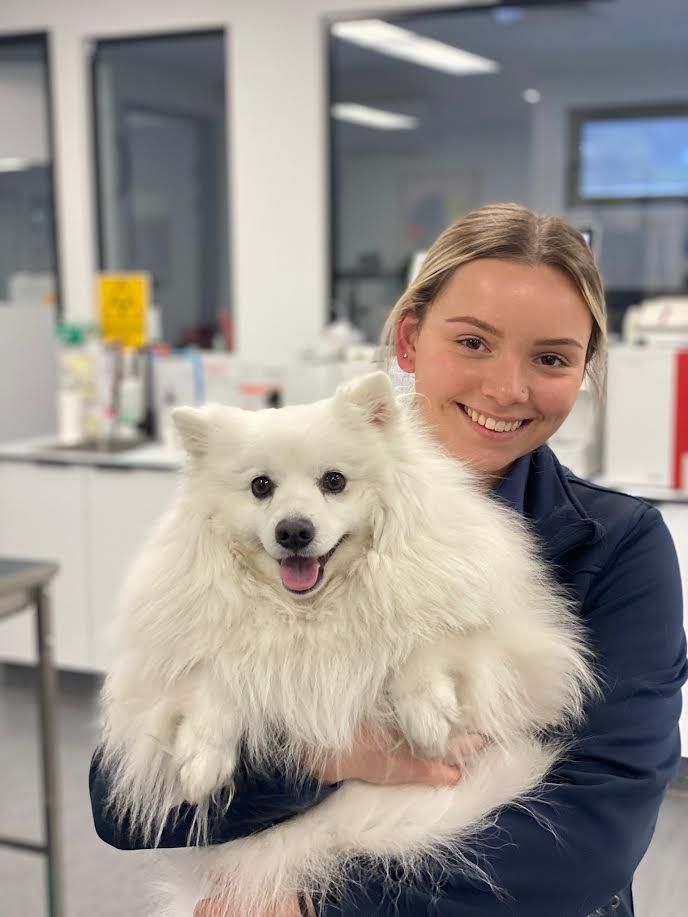
A persistent unpleasant smell from your dog’s mouth is worth checking. Dental disease is the most common cause of bad breath in dogs, although dietary factors, something your dog has scavenged, an oral problem or another underlying health concern can sometimes contribute. Bad breath should not simply be accepted as a normal part of getting older.
How dental disease causes bad breath
Plaque is a sticky film containing bacteria that forms on teeth. If it is not removed, it can harden into tartar (calculus). Bacteria and inflammation around the gums may then lead to gingivitis and, in more advanced cases, damage to the tissues supporting the teeth. Bad breath, yellow or brown deposits, and red or bleeding gums can all be signs of this process.
Some dogs continue eating despite a sore mouth, so appetite alone does not show whether their teeth are comfortable. Other possible causes include diet-related odours, oral foreign material and other health problems. A veterinary examination is the safest way to identify the cause rather than trying to mask the smell.
When should I book a veterinary visit?
Please arrange an examination for new or persistent bad breath, particularly if you notice red or swollen gums, drooling, blood around the mouth, reduced appetite, dropping food, a change in chewing or reluctance to have the face touched. Facial or jaw swelling, marked pain, or difficulty eating or drinking needs prompt veterinary advice. Serious breathing difficulty or collapse is an emergency and should not wait for a routine appointment.
A veterinarian can examine your dog’s mouth and discuss the next step. An awake examination may provide useful information, but problems below the gumline cannot be fully assessed while a dog is conscious. If a complete dental assessment or treatment is recommended, it is performed under general anaesthesia so the teeth and tissues beneath the gums can be assessed and treated; dental radiographs and the treatment plan depend on the individual findings. Pre-anaesthetic blood testing is routinely performed, with exceptions assessed by the veterinarian.
What can I do at home?
Daily brushing with toothpaste made for dogs is the most effective home measure for reducing plaque. Introduce it gradually and keep the experience positive. Do not use human toothpaste unless your veterinarian has specifically advised it, as human products may contain ingredients unsuitable for dogs.
Dental diets, approved dental chews and other home-care products may be useful additions for some dogs, but they do not replace brushing or remove established disease below the gumline. Ask your veterinarian which options suit your dog, particularly if the mouth looks sore or has heavy tartar. Avoid trying to scrape tartar from your dog’s teeth at home.
Common question: Will a chew fix the problem?
Chews can support prevention for some dogs, but they cannot identify the cause of bad breath or replace treatment for established dental disease.
If you are concerned about your dog’s breath or mouth comfort, the Vets of Geelong team can assess your dog and discuss appropriate next steps. Learn more about dental care and treatment, or book an appointment for an examination.