
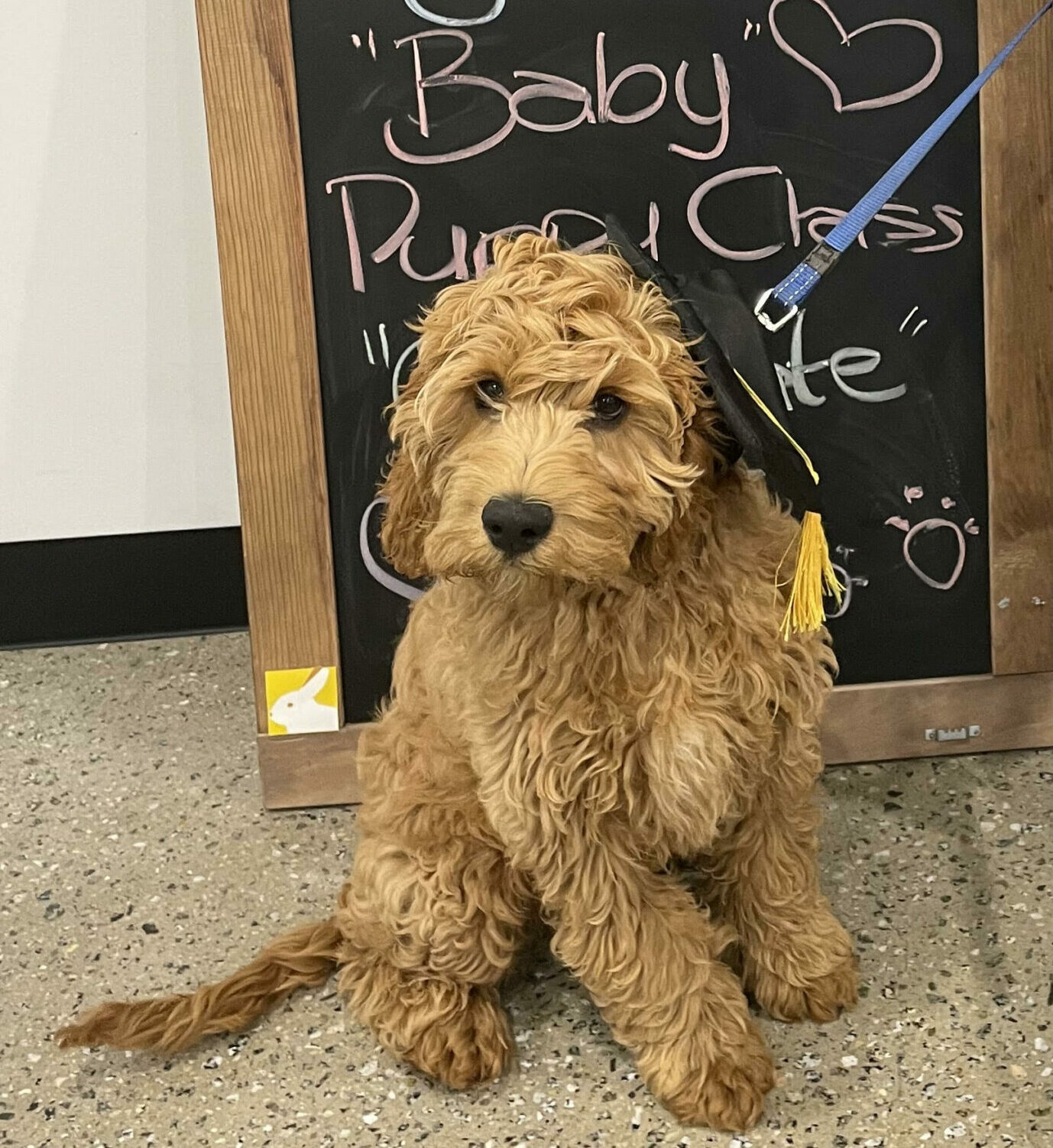
The best time to start training is when your puppy comes home. Begin with calm, everyday lessons such as learning their name, coming when called, settling on a mat and becoming comfortable with gentle handling. Puppies learn from each experience, so small, positive routines can help them feel safe and build good habits.
Build good habits at home
Keep early practice short, simple and enjoyable. Choose a quiet space, use one clear cue at a time and reward the behaviour you would like to see again. Food treats, a favourite toy, praise or play can all be useful rewards, depending on what motivates your puppy. Reward-based training sets a dog up to succeed rather than relying on physical punishment or dominance-based methods.
For example, reward four paws on the floor before greeting someone, or a calm sit before a meal. Everyone in the household should use consistent words and expectations where possible. A comfortable, quiet resting area gives your puppy somewhere to settle when they are tired or over-excited. Pause if your puppy becomes worried, frustrated or overwhelmed.
Socialisation means positive experiences
Socialisation is the gradual process of helping a puppy become comfortable with people, animals, sounds, surfaces and everyday life. It is not a race to meet everyone. Give your puppy choice and space to observe, and do not force an interaction if they look worried or want to move away. Safe, positive exposure at a pace that suits the individual puppy is more helpful than overwhelming them.
Vaccination progress and local infectious-disease risk should be considered when planning outings, introductions and classes. Puppies may generally attend puppy preschool after receiving their first vaccination, provided they are healthy and meet the relevant class requirements. Class entry requirements can change, so please confirm the current requirements with Lisa Blackwell or the appropriate Vets of Geelong team member before attending. Early vaccination does not remove every infectious-disease risk; your veterinarian can help you choose suitable lower-risk experiences while preventive care is underway. Avoid high-traffic dog areas and unknown or unwell dogs until your veterinary team advises that broader exposure is appropriate.
Are training classes useful?
A well-run class can provide structured practice, practical coaching and carefully managed social experiences. The aim is to help each puppy learn calmly and build skills with their family, not to force every puppy to interact. Vets of Geelong’s Training Classes page is the best place to check current options and preparation requirements.
Lisa Blackwell is a dog training and behaviour professional, not a veterinarian. Training support complements veterinary care: our veterinary team assesses health, vaccination status, pain or medical contributors to behaviour, and any need for treatment. If behaviour changes suddenly or your puppy seems unwell, painful or increasingly fearful, contact a veterinarian.
Frequently asked questions
Can I train my puppy before vaccinations are complete?
Yes. Gentle home training can start straight away. Ask your veterinarian about suitable social experiences and class timing for your puppy’s individual circumstances.
Should I punish mistakes?
Focus on preventing unwanted behaviour where possible and rewarding the behaviour you want instead. Patient, consistent practice is more useful than punishment.
Starting early does not mean expecting perfection. To discuss your puppy’s health, vaccination progress or training needs, book online or contact Vets of Geelong, a family-owned veterinary group serving Geelong families.
Author: Vets of Geelong Veterinary Team
Clinically reviewed by: Dr James Tiernan, Veterinarian
Clinical review approved:
Last updated: